

A little over a year ago, I began a search for a pair of jeans. My usual pair, a wardrobe staple five-oh-something Levi’s, had been worn threadbare. The color had faded, the pockets had permanent imprints of my phone and wallet, and, most crucially, the crotch had blown out. After serving as a nondescript foundation to any and all outfits since the start of high school, this pair of pants had done its duty and was due for a replacement.
I hadn’t bought a pair of jeans since starting this newsletter (not a testament to any sustainability-minded consumer-asceticism on my part, jeans just last a long time), and the last pair was probably grabbed from the mall by my Mom. So, by nature of a more intentional mindset, a lot more thought on my part was put into this purchase.
My old pair are quintessential 21st-century jeans. They came already faded, a medium blue that was a far cry from the deep indigo which colored them but not yet the sky blue that would come after years of wear. They were primarily cotton (the traditional building block of denim), but they had a bit of plastic to get that “comfortable” stretch from day one. They feature the iconic brown patch on the back right side, but it is made from a kind of paper and/or synthetic as opposed to classic leather.
These pants have the hallmarks that billions of people have come to find familiar in jeans. I could go nearly anywhere in the world and find people wearing similar pairs; I would blend in (at least from my ankles to my hips) almost anywhere.
While these jeans fit the modern-day mold, they are actually a bit of an imitation1 from the original garment that cemented itself as a sartorial staple in the 20th century. Unfortunately, most of the changes in today’s jeans are downgrades which weaken the jean and make it more environmentally harmful. In my search for a new pair, I learned about each one of the corners cut and eventually realized the best option is a pair that reproduces the actual craftsmanship of the original denim workwear rather than just imitating the look.
Blue jeans were originally made in Reno, Nevada for mine-workers and other laborers that needed hardy clothing. Trousers made of denim (a resilient, cotton-twill fabric) were already a thing, but tailor Jacob W. Davis improved the toughness by adding copper rivets to the pockets. The riveted trousers were an immediate hit, and Davis reached out to his San Francisco-based fabric supplier for help in securing a patent for the invention. For the price of $68 in 1873 ($1,871 in 2026), this supplier got to enter into partnership with Davis and secured the right “to sell all such clothing riveted according to the patent.” This lucky San Franciscan was none other than Levi Strauss. Such is the story of the origin of both blue and Levi’s jeans.
This original pant was all cotton (save for the metal rivets), hard-wearing, and dyed a deep indigo blue.2 It was first a work uniform for West Coast miners and laborers that softened and molded to the wearer over time, especially amid harsh conditions like mining. These pants wouldn’t have been worn casually; they were specialized work apparel, kind of like how high-vis vests are worn today by construction workers.
While they were likely never worn by actual cattle-driving cowboys (the drives were ending in the 1890s and jeans likely hadn’t migrated to that part of the South by then), dude ranches in the first half of the 20th century helped spread the new rough-and-tumble pant back East. People that didn’t need the sturdiness of denim began wearing blue jeans because of its associations with ruggedness and the American frontier. America has long been obsessed with a self-image defined by the Western Frontier and Manifest Destiny, even if most of the imagery we associate with such “wildness” is much more often cosplay than genuine article.
So, jeans started to become popular around the country, and with a few iconic pop culture appearances, like on the seats of Marlon Brando and James Dean, they rocketed into becoming America’s favorite pant. Did we all need extremely tough twill pants made for mine work? No, but the fun part was that even if they started off stiff and rough, they would grow into soft, perfectly-molded-for-the-wearer trousers for everyone, the softer side of society included.
The dark starting color of indigo jeans likely helped them achieve ubiquity. While “jeans go with everything” today, they didn’t start that way. Walk into a New York City bar in 1880 wearing a miner’s pair of blue denim, and you likely wouldn’t have blended in. But add a bit of popularity, and suddenly it’s not so hard to imagine a deep blue pair of pants not standing out that much compared to a bunch of dark greys and blacks. (This paragraph is speculation).
Jeans eventually overtook everything. First, in America, and then, the whole world. As jean production rose ever higher throughout the 20th century, so did America’s power and global influence. Along with rock ‘n’ roll, blue jeans became the hallmark and stereotype of American cultural influence as denim washed onto all the shores of the world. Today, there are over 4.5 billion pairs of jeans produced globally every year.
But amid this skyrocketing success, what constituted a “pair of jeans” changed. The original 19th century pant was made entirely of cotton denim, a twill fabric featuring warp and weft threads interweaving with each other at an uneven ratio. This twill creates a cascading pattern, and the indigo-dyeing of the warp thread (along with leaving the weft thread an undyed white) gives jeans both their color and their characteristic ability to fade in unique ways, showing off wear patterns. The blue indigo wears away to show more white; this happens faster at places of high tension, so what you do in the jeans determines how they fade.
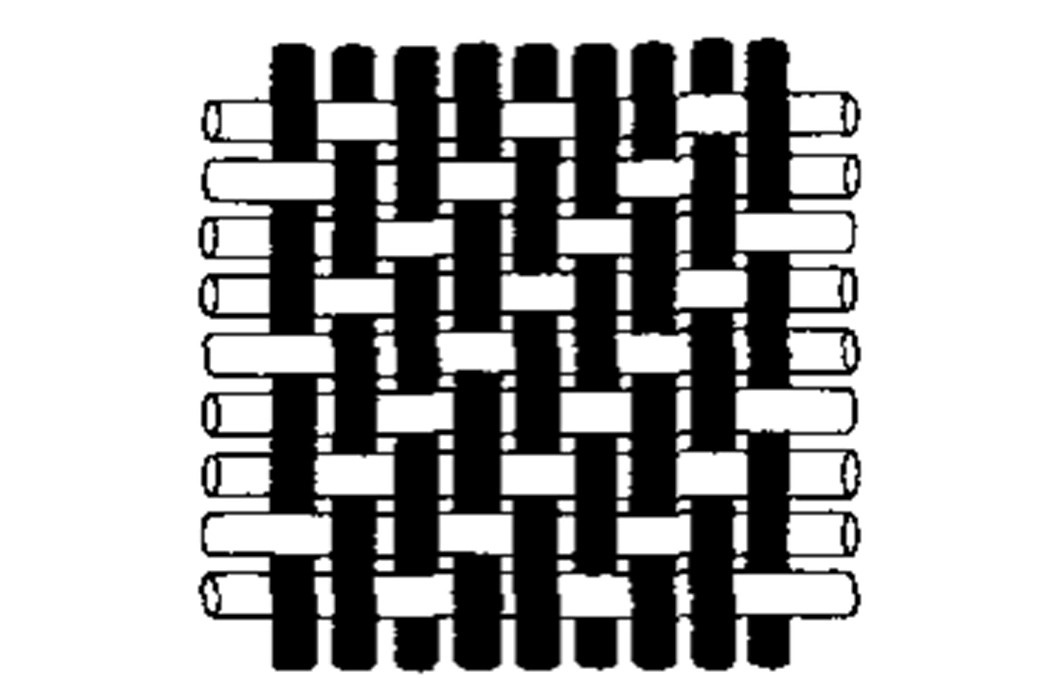
These original jeans were made on shuttle looms which produced selvedge (self + edge) fabric, named so since the weaving creates a self-finished edge that does not require any additional step to close off to prevent unraveling.
As jean makers experienced massive spikes in demand, they decided they needed to weave faster. Shuttle looms were too slow, so manufacturers moved over to modern loom technology, like projectile looms which can produce fabric faster but without the selvedge characteristic.
But weaving wasn’t the only bottleneck. Eeking out natural indigo dye from indigofera tinctoria is slow, laborious work. Scientific advancements brought about the much-easier-to-mass-produce synthetic indigo, which quickly took over the vast majority of dyeing purposes (synthetic indigo development started as early as the 1890s).
These developments got jeans out the door faster, but further growth was still ripe for the weaving. Jeans grew and grew even when they were still pretty stiff, workwear-y clothes. Crank up the softness and ready-to-wear comfort and anyone who was put off by the inherited toughness of the pants would be ready to swoon over them, too. And such it was.
Manufacturers introduced polyfibers like elastane into their jeans, adding stretch and reducing stiffness. A little bit of fossil fuel wasn’t quite enough to tap into the true growth potential, so producers started pre-washing and pre-wearing the jeans, as well. Jeans would be washed to reduce indigo bleed and achieve a lighter look, so consumers could get the neutral-to-sky blue jeans without having to wait or wear them for years. This would also further soften the pant, since the washing isn’t done in one light soak. Pre-washed jeans may be drenched for extended periods of time while being tumbled with pumice stones to weaken the stiff denim and create a fabric soft enough for any store shelf.
Chances are that your jeans were made in this most recent style. If you don’t know whether your jeans were synthetically dyed, imbued with polyfibers, and pre-weakened and distressed, then they almost certainly were. The vast majority of today’s market is solely this new style.
This modern jean archetype is not sustainable, both in its processes and volume. Elastane and other fossil fuel-derived materials create emissions in their creation and fail to breakdown at the end of their products’ life-cycles, leading to microplastics and long-term waste.
Jeans that are intensely pre-washed and beaten up right off the shelf are closer to their breaking points from day one. The fibers being broken in and softened means that they will fail and tear sooner. Even if all other things were held constant, jeans that are pre-distressed won’t last as long, which means they will have to be replaced sooner, thereby requiring more materials.
Synthetic indigo generally uses or creates fossil fuels in its production, which ideally would be avoided in a sustainable world. The actual final product of synthetic indigo is the exact same thing as the final product of natural indigo (at least chemically, the substances are the same, but real-world natural indigo may have slight amounts of other compounds that some argue make a difference in the visuals of any dyed piece), and natural indigo also features some environmental issues in its creation. Indigo is the smallest of the problem children for this discussion, but natural indigo likely has less associated emissions.
Finally, the sheer volume of jean production exacerbates all of these component issues. If 6 jeans were made each year, none of these problems would be that worth talking about. But we make 6 billion, producing and buying and selling and throwing out more jeans than we could ever need, endlessly chasing fashion trends with a garment made to stand up to decades of the most intense work as has ever been done.
In my searching for an environmentally chill pair of jeans, I came across all of these aspects and sustainability concerns. It seemed that most of the world of jeans would miss the mark for me. But, amidst the articles and searches, it was hard to miss one other element of jeans-mania. Anyone delving this far into the problems and issues of jeans will surely find the same, a smaller subset of jeans makers and buyers that place a premium on the old style of the pant.
This article will already be pretty long, relatively, so I don’t have the space to fully delve into this universe, but I’ll suffice it to say that the answer I found was in Japanese denim. During America’s exporting of culture and style in the 20th century, Japan absorbed Yankee milieu more than most. One of the most notable aspects of this diffusion was clothing, especially cotton-wear and blue jeans.
Again, huge story here. Summarized: a bunch of jeans makers started in Japan in the late 1900s, with plenty of them having a large focus on making classic American jeans as they were made in the past. Today, Japan is the leader in making high-quality, crafted denim. If you want a great pair of 100% cotton jeans, Japanese producers will at least be in the running, if not constituting all of the top contenders.

At the end of my particular search, I found a pair of un-distressed, 100% cotton, natural indigo-dyed, selvedge denim jeans from Japanese jean-making legend Studio D’Artisan. Specifically, their straight-leg, SD-DO1 model.
While pricey (Japanese selvedge jeans generally run ~$150-$400), this kind of pant was meant to last for decades under heavy wear. For me, an effete modern man, I will likely never put them through the sustained wear they were designed for. As such, I assume this pair of pants could last me forever. It will wear to my body and conform to my particular use, becoming an extension of self. Hopefully, it will also serve as a reminder that the need to chase trends is a false one.
While I brainstormed and wrote this piece, a burst of inspiration came to me after one of my computer-addled days when I also felt a bit sick. As I became a touch delirious from some nighttime cold medicine, the philosophical thrust of what I’m trying to say here became a little more crystallized. First captured in my phone’s notes app and as much self-catharsis as an attempt to accurately describe a worldly phenomenon, I assume you’ll be fine with some impassioned philosophizing if you’ve already read this far:
The modern jean is a symptom of our disconnectedness. It first lost its original purpose and associated workwear reality as it moved from the mines to the masses of New York. That could be managed—all clothing adapts and grows—but then it lost another layer. Plastic and pre-distressed, it became a comfortable commodity of fast fashion. A dreg part of a dreg uniform when paired with polyester shirts and plastic underwear, churned out at lightning speed with no care for the craft of making the garment. Past work- and sweatshops sucked the souls out of their workers, no doubt, and cotton is famous for the excruciating toll it took on exploited workers, most often children and women, but all this time thing’s were still at the level of human craft. A machine’s involvement in some venture does not necessitate the flight of spirit, but the relentless scale of infinite optimization in production that serves not to better the artifact but to facilitate the rapid flood of its simulacrum is a soul-robbing endeavor.
This new jean is emblematic of the disconnect of modern mensch. We are too many layers removed from the Earth. From the cotton grown in our own country which finds its way to our skin, enshrouding us our whole life without commanding any attention from us. It is how the Earth has become invisible. It is how we may glimpse the Moon for a moment or two every other night through our windows but otherwise find it out of site, blocked by walls and artificial light that sizzles our rods and cones until the moment our eyelids shut for a night’s uneasy rest, a rest that used to be governed by the timetables of darkness but is now only artificially chosen to coincide, crudely, with the Sun’s absence.
The new jean, the jean as we all know it, puts on display the cavity that should be connection. An old jean, which can link the Earth’s art of a cotton boll to the careful crafting of an artisan’s hand, which can put on display the glory of human care, art, and intention, weaves us all together.
I know I’m late for Earth Day, but it’s still Earth month! Even though today’s jeans can disappear right on our legs, that they become an invisible background along with every other for-granted, forsaken aspect of modern life that lulls us into believing it is and has been the universe’s default, they are not.
They are an intentioned choice. These choices make our modern world, and they must be, to some degree, unmade if we are to have a world at all familiar to leave to those who follow us. Earth Day is a moment to remember this. Jeans are an Earth Day. Everything is Earth Day.3
Old conclusion: buy used!!4
Not quite a simulacrum, but on the path towards one.
The first riveted pant might’ve actually been made of duck canvas (as opposed to denim) which means it may not have been dyed with indigo. The blue jean would’ve been around in the early days in either case though.
One Towards 2030 recently told me that they were a tad disappointed that my last post wasn’t tremendously long. Hopefully this article makes up for that! Also, I’ll try to write more frequently.
There are plenty of options today for all natural, old school jeans, and plenty are even going beyond just recreating old styles. They are focusing on sustainable craftsmanship but also evolving the jean.
All that said, you could shop vintage or thrift, too. While plenty of vintage jeans at this point include jeans made in the new, plastic-infused style, places like Slash Denim in Berkeley, CA, exist and they offer a range of vintage old school jeans made in the old ways.
Buying used is almost always more sustainable than buying new, and the most sustainable option is generally to buy less. That’s good advice, but we still need to develop better systems and supply chains for the times we do buy.
For jeans, that would look like reducing the number produced, bought, sold, and thrown out by like 95%. But that can work, because the old jeans last longer than the new jeans, and the new jeans still last plenty long! If jeans are timeless, then explore the artifact in a congruent way. No one needs 7 new pairs of jeans each year to align with trends. If you have a few solid options, they’ll last through decades and dozens of trends.